
By Fr. Kelvin Ugwu
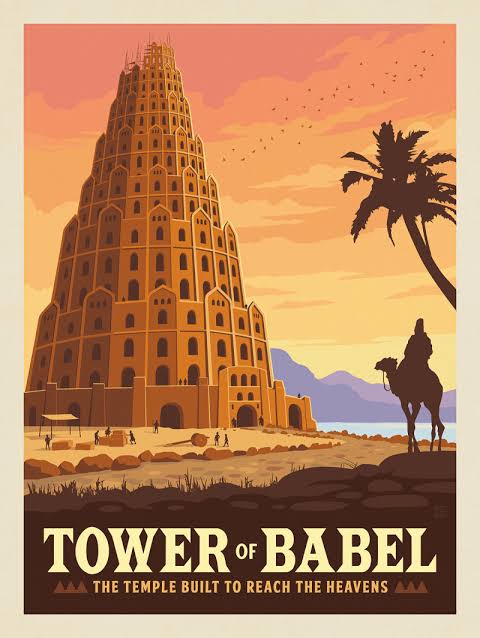
Most of the people I know that are trying to make sense of the story of the Tower of Babel and even laugh at the story were reading it literally. When you reduce the story to literal interpretation, you immediately run into some serious problems.
1. The portrayal of God as insecure
A literal reading of the story seems to portray God as someone intimidated by human ability and unity. It presents God as insecure and somewhat afraid of what human beings could achieve when they are united. As a result, he supposedly decided to scatter their plans by confusing their language. Once they could no longer understand one another, their plan to build a tower that would reach the heavens abruptly came to an end.
2. The science of language
The science and formation of language do not support the Babel story when taken literally. If we are looking for a classical example, consider the English language. When did English come to be? Was it not formed from different languages over time?
Now look at Pidgin English. Have you ever heard a Warri man speak pidgin? So did pidgin also come out of the Tower of Babel?
Languages evolve. They develop gradually through interaction, borrowing, and adaptation. They do not suddenly appear overnight.
3. Heaven as the sky
A literal interpretation of the passage gives the impression that heaven is simply the sky. It also raises obvious questions. Where exactly is heaven? What sort of tower could people of that generation realistically build? Five hundred feet? One thousand feet?
For context, the tallest building in the world today is the Burj Khalifa in the United Arab Emirates. It is 828 meters or 2,717 feet tall. That achievement required advanced steel, complex engineering software, and global expertise. Was God intimidated by the Arabs for building a structure far taller than anything the builders of Babel could have imagined?
Let us push the argument further.
If the tallest building in the world is just about 3,000 feet, compare that with Mount Everest, the tallest mountain in the world. Mount Everest stands at 8,848 meters or 29,029 feet. You are talking about a mountain that is many times taller than the tallest structure humans have ever built. How can God be intimidated when creation already contains something far greater than anything human hands can produce?
Let me expand the argument further so you understand that there are limits we cannot cross, and why a literal interpretation of the Tower of Babel story becomes laughable.
Commercial airplanes fly at around 10 to 12 kilometers or 33,000 to 39,000 feet above the Earth. They cruise at altitudes that are far below the height of Everest.
Do you know why they cannot fly higher?
Simple. The higher you go, the thinner the air becomes, and it can no longer support lift. Engineers must work within the limits of physics. This is something the people of Babel most likely did not understand.
If you still do not get it, take time to read about what is called the Kármán line.
No matter how ambitious anyone might be, no one can build a tower to reach the Kármán line, which lies at about 100 kilometers or 62 miles above sea level. As you go higher, the atmosphere does not suddenly end. It thins and gradually blends into space. Gravity changes. Physical conditions change.
If the Creator has already put all these limits in place, then it makes no sense to say he was intimidated or worried about the Tower of Babel in the literal sense of the story. It simply means the story was never meant to be understood literally.
So, if you read the story of the Tower of Babel literally and laugh at the Bible, the problem is not the Bible. The problem is your inability to understand the message the Bible is trying to convey.
It is to understand the true message of the story and to learn and unlearn what we think we know that gave birth to this series. If you are sincerely open to learning, then you are in the right place. Follow this page!
See you in my next post.
#PurestPurity