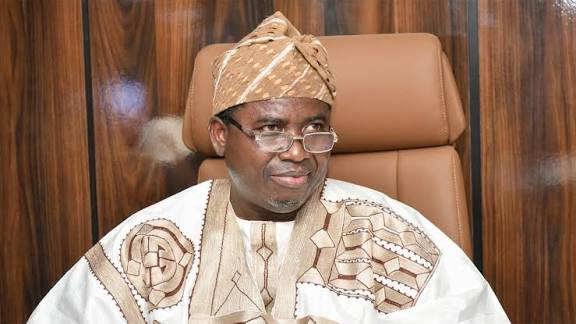
* Demands INEC Chairman’s sack
The Supreme Council for Shari’ah in Nigeria (SCSN), said the Muslim Ummah will not recognise any election conducted by the Independent National Electoral Commission (INEC) under the leadership of its chairman, Prof. Joash Amupitan.
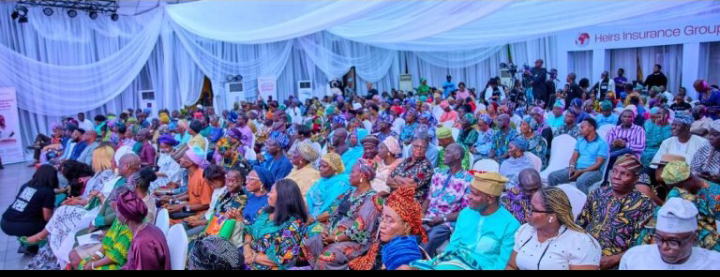
President of the Council, Sheikh Bashir Aliyu Umar, at the council’s annual pre-Ramadan lecture and general assembly in Abuja on Wednesday, called for Amupitan’s removal, claiming lack of confidence in his integrity to be fair to all faiths in Nigeria.
Sheikh Umar said the mistrust arose after Amupitan authored a brief claiming that Christians in Nigeria are victims of genocide, which he stated, that Federal Government repeatedly dismissed.
Amupitan had previously described the Boko Haram insurgency and attacks by “Fulani herdsmen” as part of a coordinated anti-Christian campaign requiring international intervention.
The INEC Chairman was listed as a contributor to the 2020 publication, “Nigeria’s Silent Slaughter: Genocide in Nigeria and the Implications for the International Community,” released by the International Committee on Nigeria (ICON) and the International Organisation on Peace-building & Social Justice (PSJ).
The report documented alleged systematic killings of Christians in Nigeria and called for global action.
Amupitan authored an 80-page chapter titled Legal Brief: Genocide in Nigeria, which argued that the scale and pattern of killings and displacement of Christians met the threshold for genocide under international law.
The brief also accused the Federal Government of failing to protect affected communities and ensure justice for victims.
The Shariah Council President therefore, demand the immediate removal and prosecution of the INEC chairman.
He added that “no election conducted under a cloud of compromised integrity can be recognised as credible.”
Umar noted that credible exposés on the chairman’s conduct, particularly allegations of divisive propaganda and treasonous undertones, justified the council’s demand.
“Democratic credibility must never be compromised. Someone with compromised integrity should resign, or the government should dismiss or compulsorily retire him,” he demanded.
Umar disclosed that the council is already challenging Amupitan’s appointment in court.
“We are an advocacy group and will support any legal effort questioning the veracity of his appointment,” he said.
The Shariah Council President rejected the narrative of a “Christian genocide,” warning that dishonest public discourse fuels division and instability.
He opposed foreign interference, the establishment of foreign military bases, unjust tax reforms, and any alteration of approved bills by the executive without legislative oversight.
He urged the National Assembly to conduct public hearings and undertake forensic reviews of all laws passed since the 10th Assembly began.
He condemned terrorism in all forms and called for the protection of every Nigerian through security measures and peaceful reconciliation.
Umar further warned against removing provisions protecting Muslims’ right to Shariah in constitutional amendments, emphasising that Shariah applies only to Muslims and does not infringe on Christian rights. He highlighted the dismissal of the case, attempting to stop Shariah panels in Oyo State.
House of Representatives member Sani Jaji noted that the conference guides Islamic scholars on Ramadan lectures amidst national challenges.
Similarly, Madakin Zazzau, Mal. Muhammadu Munir Ja’afaru lauded the council as a credible and principled voice of the Nigerian Muslim Ummah.
The Shari’ah council had previously asked President Tinubu to review Prof. Joash Amupitan’s appointment as INEC chairman.
In a statement by its Secretary-General, Nafiu Baba-Ahmad, the council expressed “serious concern” over a document authored by Amupitan, describing it as a “toxic legal brief containing highly provocative, distorted, and bigoted assertions” about conflicts in Northern Nigeria.
The SCSN said it was “disturbing” that someone now responsible for safeguarding Nigeria’s democratic integrity could have promoted such divisive and sectarian views, noting that the INEC chairmanship requires neutrality, fairness, and inclusivity.
Similarly, MURIC Executive Director, Prof. Ishaq Akintola, condemned the brief, calling it “shocking” and questioning Amupitan’s ability to oversee elections impartially.
Efforts to get a reaction from INEC were unsuccessful as the media aide to the commission’s chairman and the Director of Voter Education were not reachable via phone calls and SMS.
However, an INEC official said calls by some groups for the removal of Prof. Joash Amupitan are not within the commission’s mandate, describing them as matters for the appointing authority to address.
The official noted that Amupitan’s appointment was carried out in accordance with the Constitution and the Electoral Act.
“He is a Nigerian, he is qualified and went through the necessary screening processes. What does that have to do with the chairman?” the source asked.
The official emphasised that INEC operates as a collegiate body, with decisions made collectively by its 12 national commissioners representing the geopolitical zones, rather than unilaterally by the chairman.
“To me, it is not in the purview of the commission to respond to these calls. Any response should come from the appointing authority,” the official said.
The source added that the commission remains focused on its constitutional duties and will not be distracted by issues unrelated to electoral activities.
INEC’s priority, the official stressed, is to ensure free, fair, and credible elections across the country.